We’ve All Been There: The Restaurant Rescue
Picture this: you’re at a family restaurant, stomachs rumbling and anticipation high. You’ve ordered, settled in, and are looking forward to a peaceful meal together. Then your toddler begins the familiar refrain—asking for dinner repeatedly, each request more urgent than the last. The volume escalates, tears threaten, and you feel the weight of other diners’ glances.
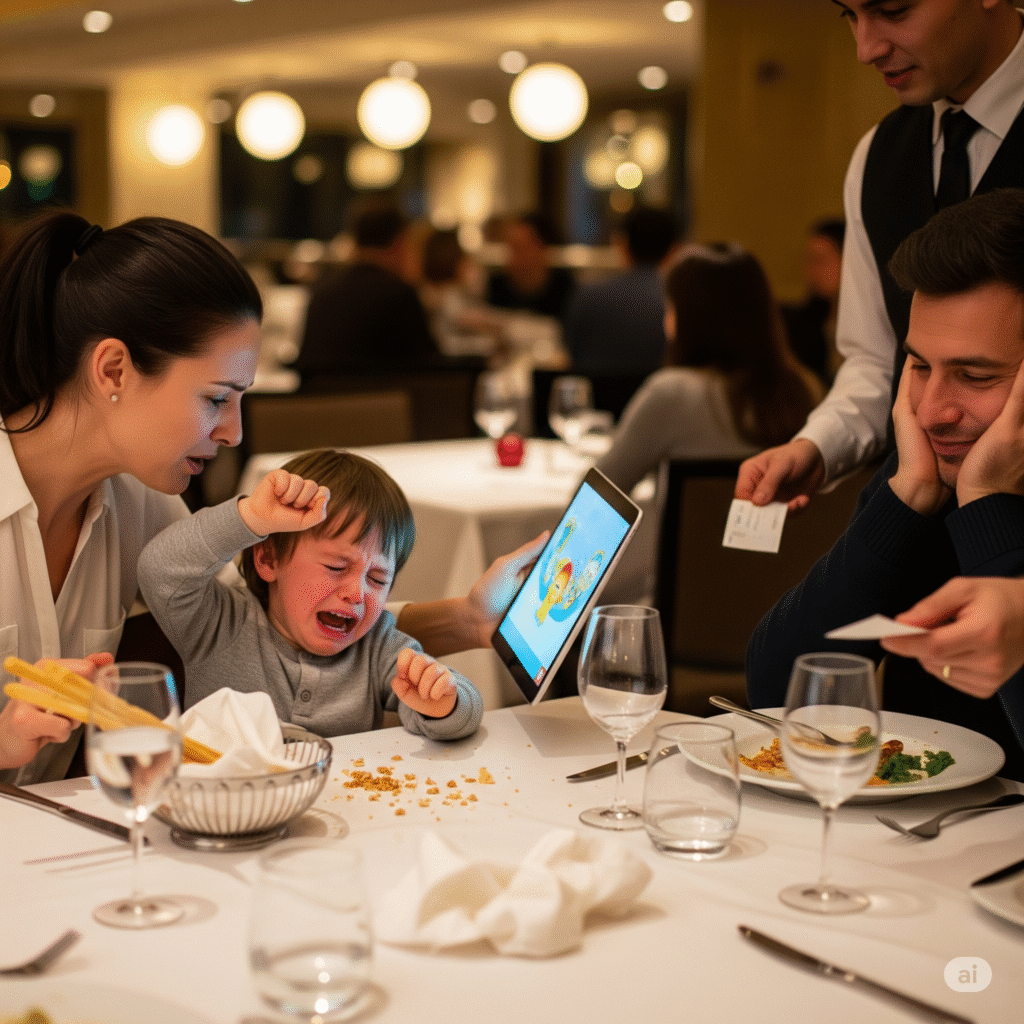
In that moment of mounting pressure, you reach for the digital lifeline: the tablet. YouTube Kids appears, your child’s attention is instantly captured, and blessed silence returns. Crisis averted – or is it?
This scenario raises an important question that many of us wrestle with: are we solving today’s problem while creating tomorrow’s challenge?
The Digital Revolution in Our Hands
When the iPad first arrived, it was celebrated as a breakthrough that would transform how we live and learn. And it has – particularly for parents. No longer do children need to endure boring waits at doctor’s offices with outdated toys, or struggle through long car rides with nothing but their imagination for company. We now have access to endless entertainment options at our fingertips.

This technological miracle seemed like the ultimate parenting tool – a way to create those precious moments of peace we all crave. However, as many parents are discovering, convenience sometimes comes with hidden costs.
Research has consistently linked excessive screen time to concerning developmental issues, including delayed language skills, increased aggression, attention difficulties, and academic struggles. This leaves us with the crucial question: when does helpful become harmful?
What Child Development Experts Recommend
Leading pediatric and child development organizations have reached a general consensus on healthy screen time limits across three key age groups:
Ages 0-2 years: Zero screen time (except video chatting with family)
Ages 2-5 years: Maximum of 1 hour daily of high-quality content
Ages 5-17 years: Up to 2 hours daily for entertainment (excluding educational or homework-related screen time)
As a mother of two young children, I’ll be honest – I haven’t always met these guidelines, and I suspect many of you haven’t either. The key word here is “guidelines.” These are research-based recommendations we should strive toward, not rigid rules that should cause stress when life gets in the way.
The Reality: How Much Screen Time Are Children Actually Getting?
Recent data from the 2025 Zero to Eight Census by Common Sense Media reveals some eye-opening trends in children’s media consumption:
- 2-year-olds now average 1 hour and 3 minutes daily – a 28% increase from 2020’s 49 minutes
- 5-8 year-olds spend an average of 3 hours and 28 minutes with screens – up 12% from 2020’s 3 hours and 5 minutes
Interestingly, children aged 2-4 years showed a 14% decrease in screen time, possibly due to increased enrollment in daycare and preschool programs during these years.
| Age Range | 2017 | 2020 | 2025 |
|---|---|---|---|
| 0-2 | 42 min | 49 min (+16%) | 1 hr 3min (+28%) |
| 2-4 | 2 hr 39min | 2 hr 30min (-5.6%) | 2 hr 8min (-14%) |
| 5-8 | 2hr 56min | 3 hrs 5min (+5%) | 3 hr 28min (+12%) |
Perhaps more significant than the quantity is the dramatic shift in how children consume media. While earlier generations primarily watched DVDs and television shows (longer-form content that encouraged sustained attention), today’s children spend most of their screen time on mobile devices – gaming and watching YouTube videos designed for instant gratification and rapid content switching.
The personal device ownership statistics are equally telling: 48% of children 8 and under now have their own tablet, while 9% own their own smartphone.
Understanding the Modern Parenting Challenge
Many parents carry tremendous guilt about their children’s screen time, and it’s important to understand why this burden feels so heavy. Parenting has fundamentally changed over the past few decades, and not necessarily by choice.

Today’s parents often find themselves more isolated than previous generations. Economic realities frequently mean living far from extended family who traditionally provided crucial childcare support. The “village” we imagined would help raise our children often feels like a distant dream. Many of us don’t even know our neighbors well enough to feel comfortable with unsupervised neighborhood play.
This isolation makes everyday parenting tasks exponentially more challenging. When you need to prepare dinner, fold laundry, or simply take a shower, technology naturally becomes a helpful tool for keeping children safely occupied and entertained.
Exploring Common Solutions (And Why They’re Not Always Realistic)
“Just build your own village” While this sounds wonderful in theory, creating a strong support network from scratch is incredibly challenging in today’s world. If you’ve successfully done this, you’re among the fortunate few – and your strategies would be invaluable to share with other parents!
“Simply eliminate technology from your children’s lives” In our digitally integrated society, this approach feels both unrealistic and potentially counterproductive. Technology isn’t inherently harmful – it’s a tool that requires thoughtful management rather than complete avoidance. The goal should be finding balance, not total elimination.
“Let them play outside all day” Outdoor play is absolutely essential for healthy child development and can make parenting more enjoyable. However, all-day outdoor activity isn’t practical for most families, and younger children require constant supervision, which limits this as a complete solution.
A More Balanced Approach to Screen Time
Rather than pursuing perfectionist strategies, consider focusing on these more achievable goals:
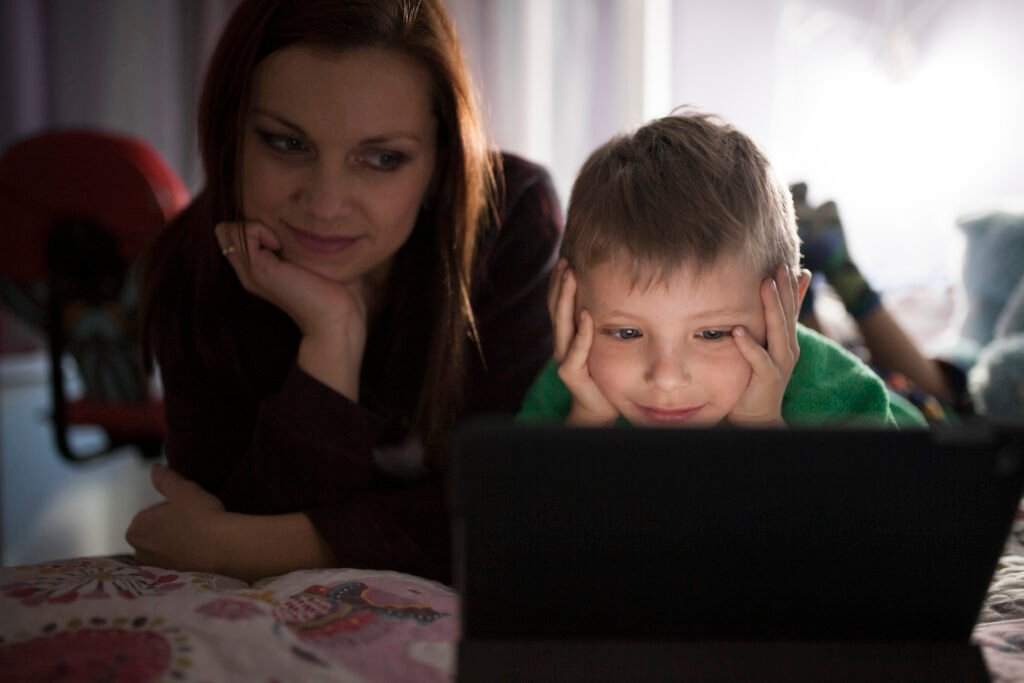
Educate yourself about current technology trends and platforms your children use. Understanding their digital world helps you make informed decisions and engage meaningfully with their interests.
Engage actively when possible – both through technology and away from it. Show genuine interest in what captures your child’s attention, whether it’s a favorite app or an outdoor adventure.
Model healthy habits yourself. Children learn more from observing our behavior than from listening to our rules. Regularly assess your own technology use and demonstrate the balanced relationship you want them to develop.
The foundation of healthy screen time isn’t about achieving perfect adherence to expert guidelines – it’s about creating intentional, balanced habits that work for your unique family situation while keeping your children’s long-term development and well-being as the priority.
Sources
https://aifs.gov.au/resources/short-articles/too-much-time-screens
https://www.mayoclinic.org/healthy-lifestyle/childrens-health/in-depth/screen-time/art-20047952